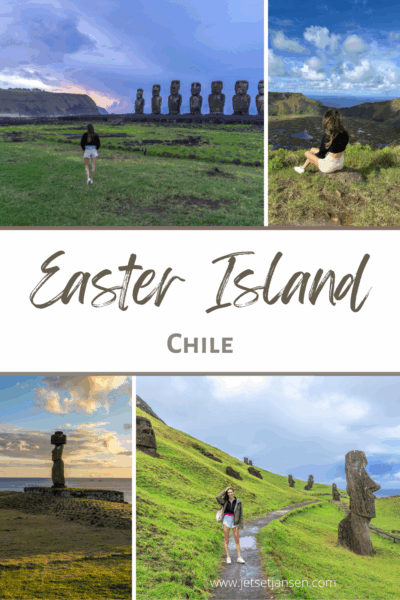
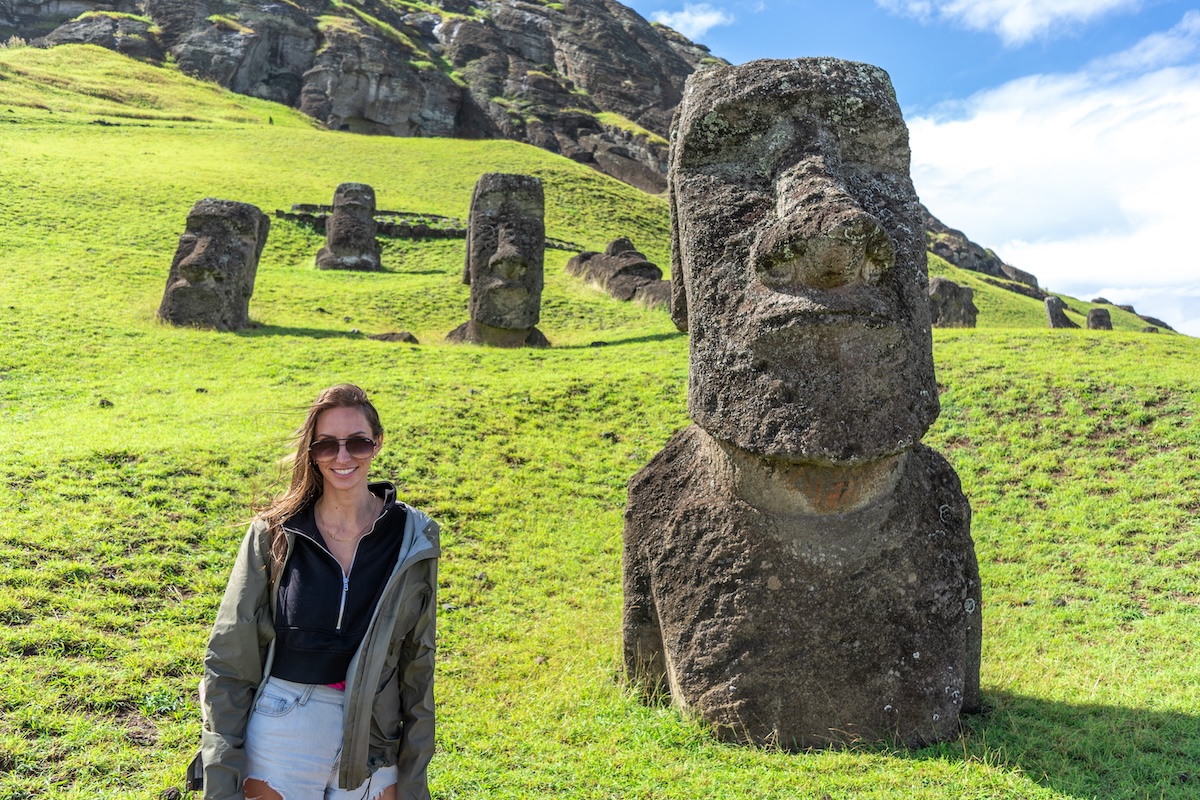
Easter Island had been on my bucket list for a while but it’s one of those places where you just never know when you’ll have the opportunity to go. Seeing the Moai statues is obviously one of the top things to do on Easter Island and I was determined to get there at some point.
I ended up traveling solo to Chile on a much needed escape from reality and decided to finally check the Moai statues off my bucket list.
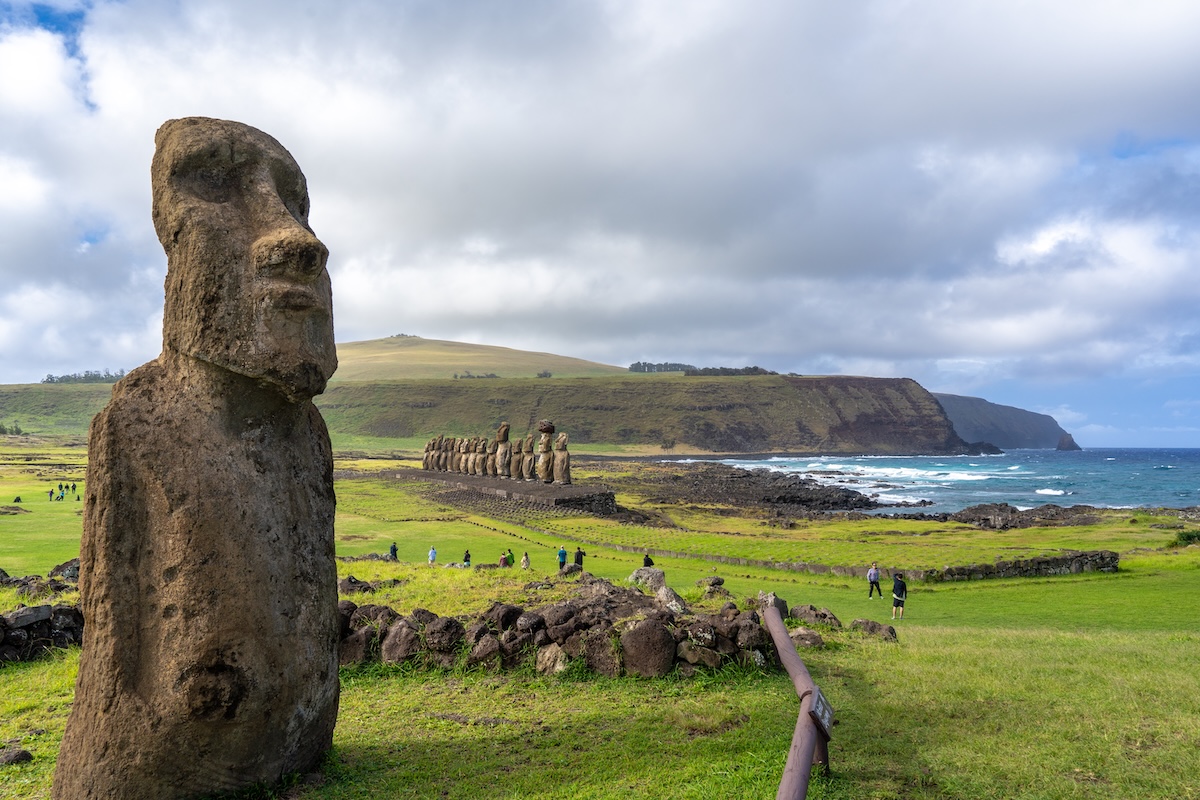
It’s definitely a commitment because Easter Island is one of the most remote places in the world. It’s located off the coast of Chile and the closest inhabited island is over 1,200 miles away. And the coast of Chile is over 2,500 miles away.
But still, I was determined to visit and so I spent 10 days in Chile exploring the desert in the north and Easter Island.
Getting There
There’s no easy way around it–getting to Easter Island takes some time but it is straight forward. I had just come from spending 4 days in the Atacama Desert which is not close to anything else. Because of how long Chile is, it’s a bit difficult to see things because the main places are not close at all.
Santiago is somewhat in the middle of the country, the desert is in the north, you have Patagonia in the south–all several hours by plane. And then there’s Easter Island which is way out in the middle of the Pacific Ocean.
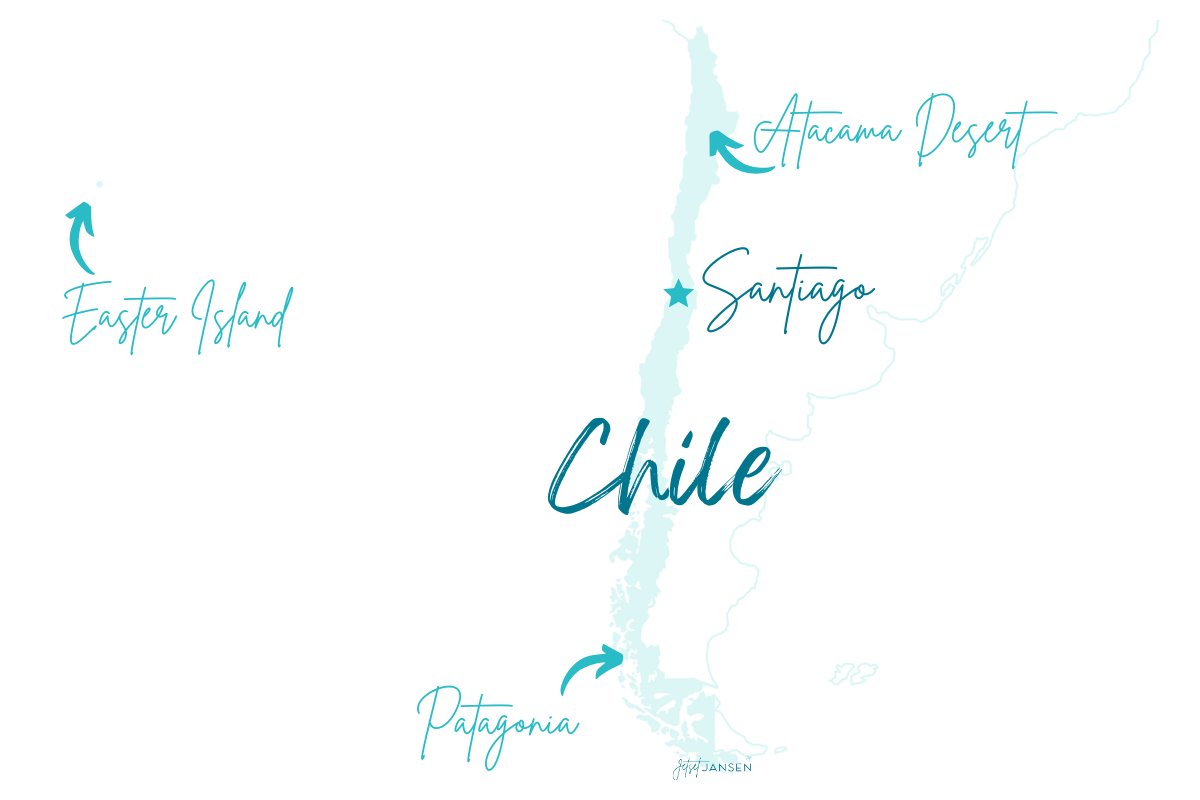
From Santiago, it’s about a 5.5 hour flight to the island. Because of its remoteness, flights are usually pretty expensive and there aren’t too many options. But the good news is that once you’re there, you’re just a few minutes from the main part of Hanga Roa and your accommodation.
Things to Do on Easter Island
Easter Island isn’t that big and the main thing to do is see the statues. Over 40% of the island is a National Park and you do need to have a guide to visit certain areas. The best way to explore is to book a multi-day tour around the island. Mine was a 2.5 day tour–I had two full days on the island and two half days.
Your tour will take you all over the island to the main statues (and then some). And I also had the afternoon to explore Hanga Roa when I arrived and several hours before flying out. I could have spent a littleee more time here but the flight schedule will dictate how long you stay.
It was either I spend about three days there or about six if I recall. Six is quite a long time for this island.
See the Moai statue at the airport
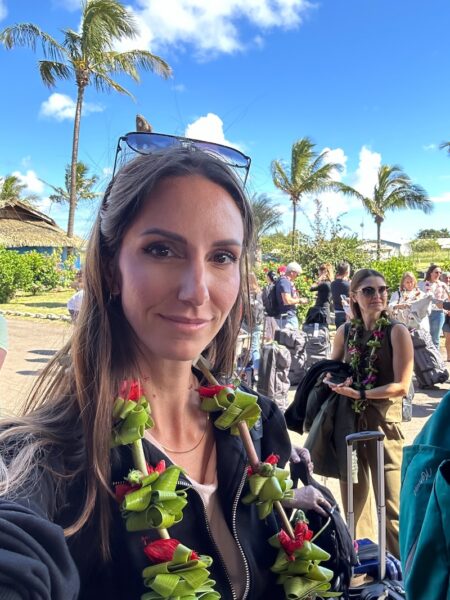
There’s actually a Moai statue right as you get off the airplane but I missed this statue the first time around. I walked right past it like everyone else as there’s a big Iorana (Hello/Welcome in Rapa Nui) sign at the entrance I was looking at instead.
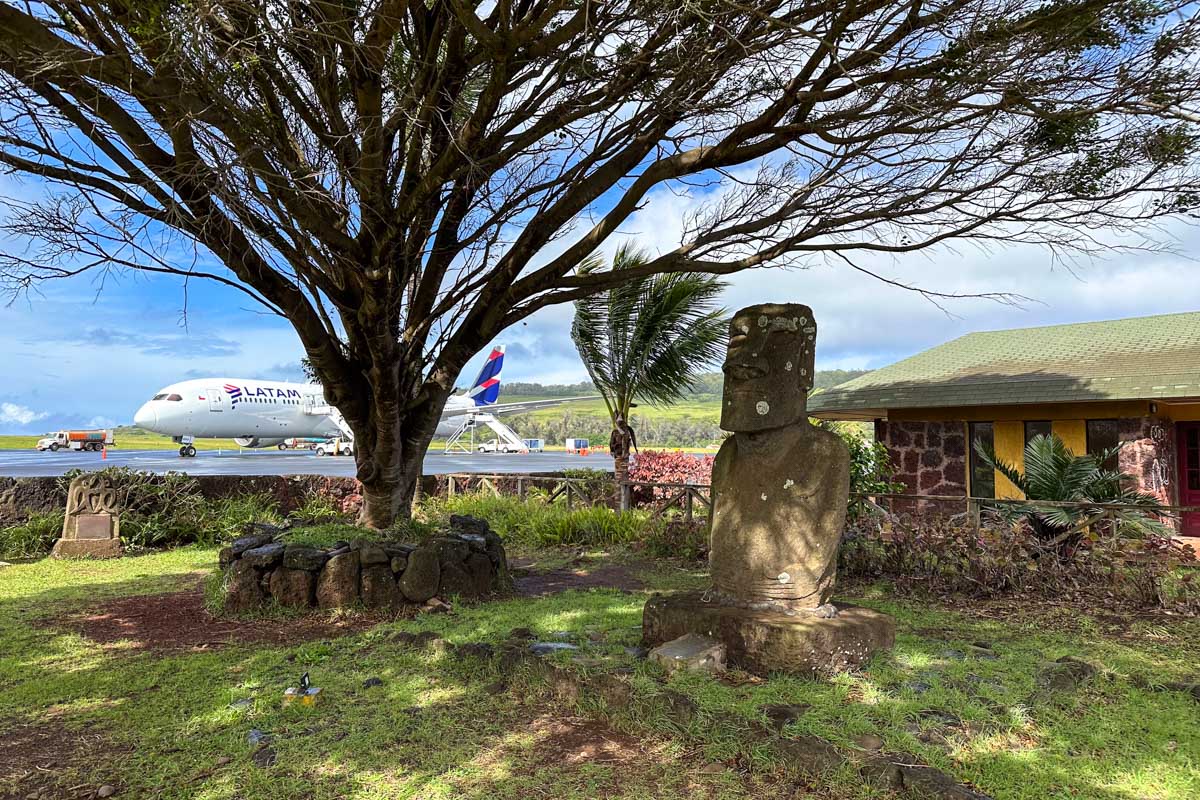
But it’s right outside the cafe/tables at the waiting area for departures, so you’ll see it on your way out if you miss it the first time around.
Explore Hanga Roa
Hanga Roa is very walkable and you won’t need transportation staying in the main town. There are several restaurants along the water with good views, a shopping street with a couple boutiques and cafes and a few things to find around the city.
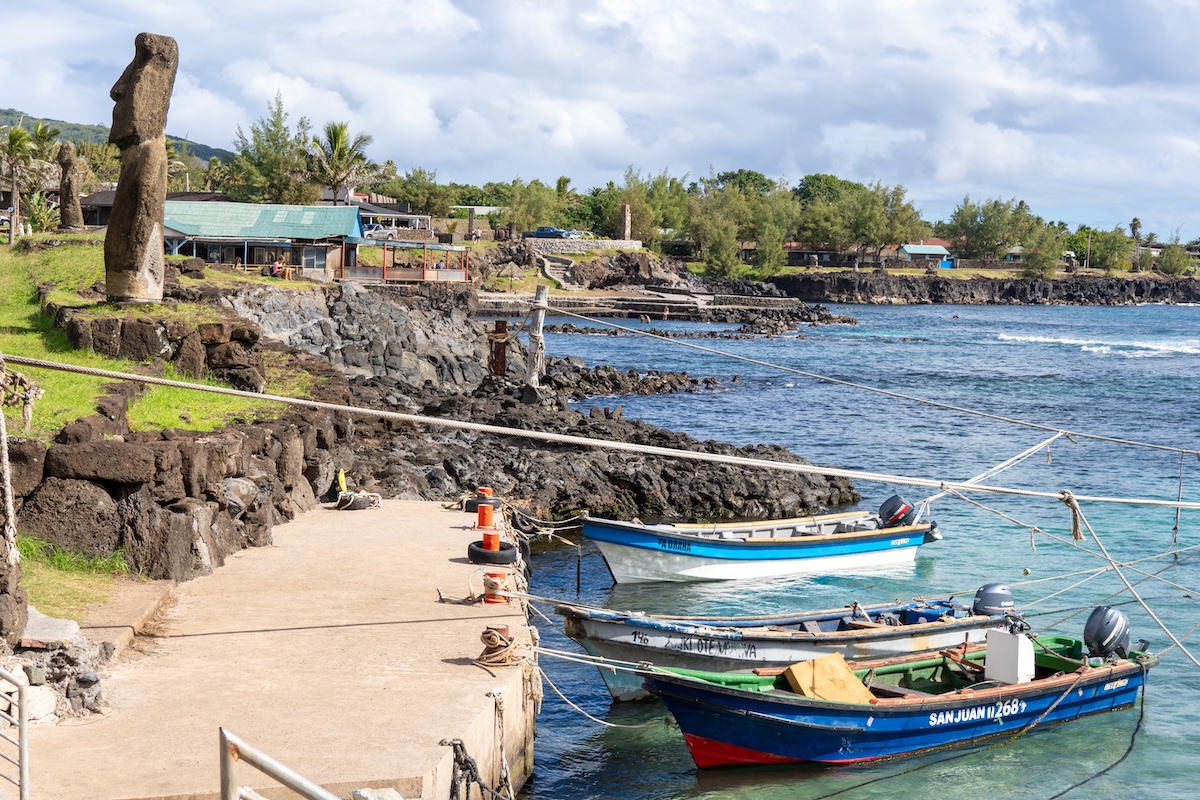
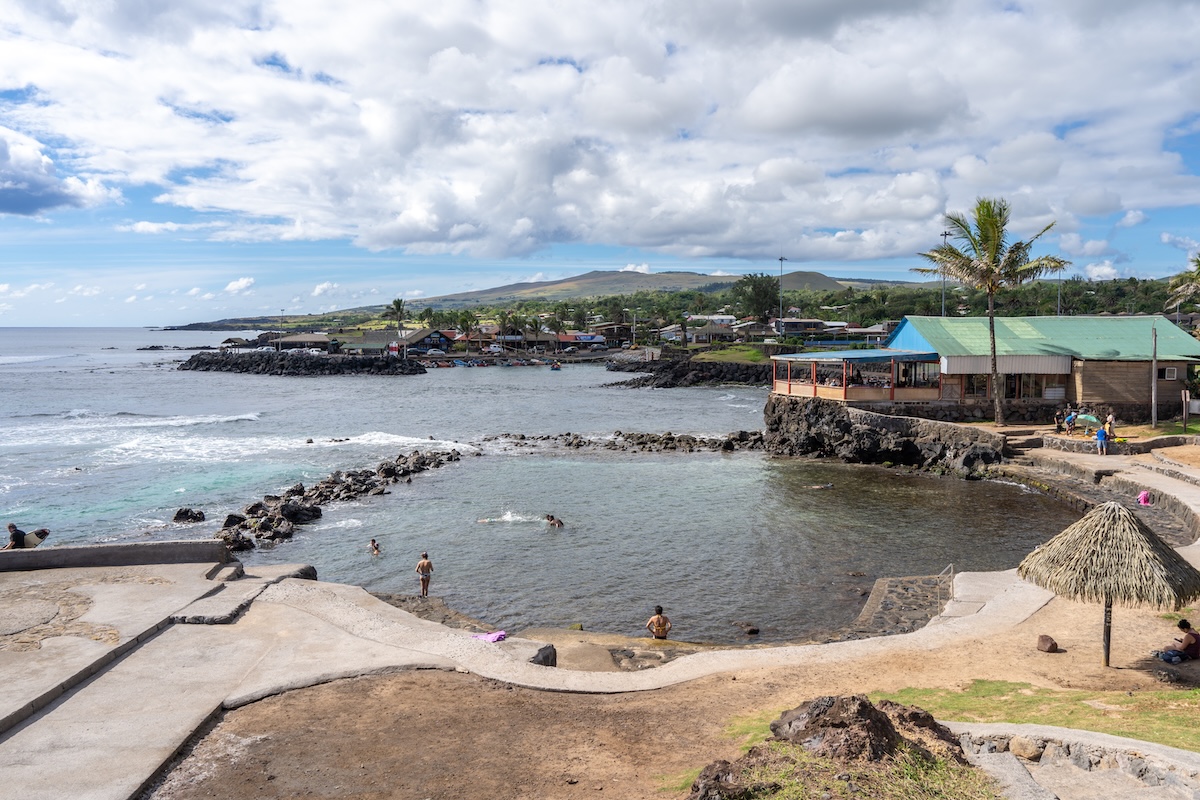
Pea Beach is a little swimming cove that’s a popular place to swim and look for turtles. There’s also a natural swimming area called Poko Poko, a botanical garden, crafts market and a small Catholic Church.
Find the statues around Hanga Roa
It’s a bit exciting when you land because you’re trying to spot your first Moai statue. I didn’t see any until after I was checked into my hotel. I walked along one of the main streets and then went along the coast where I ran into Ahu Hotake.
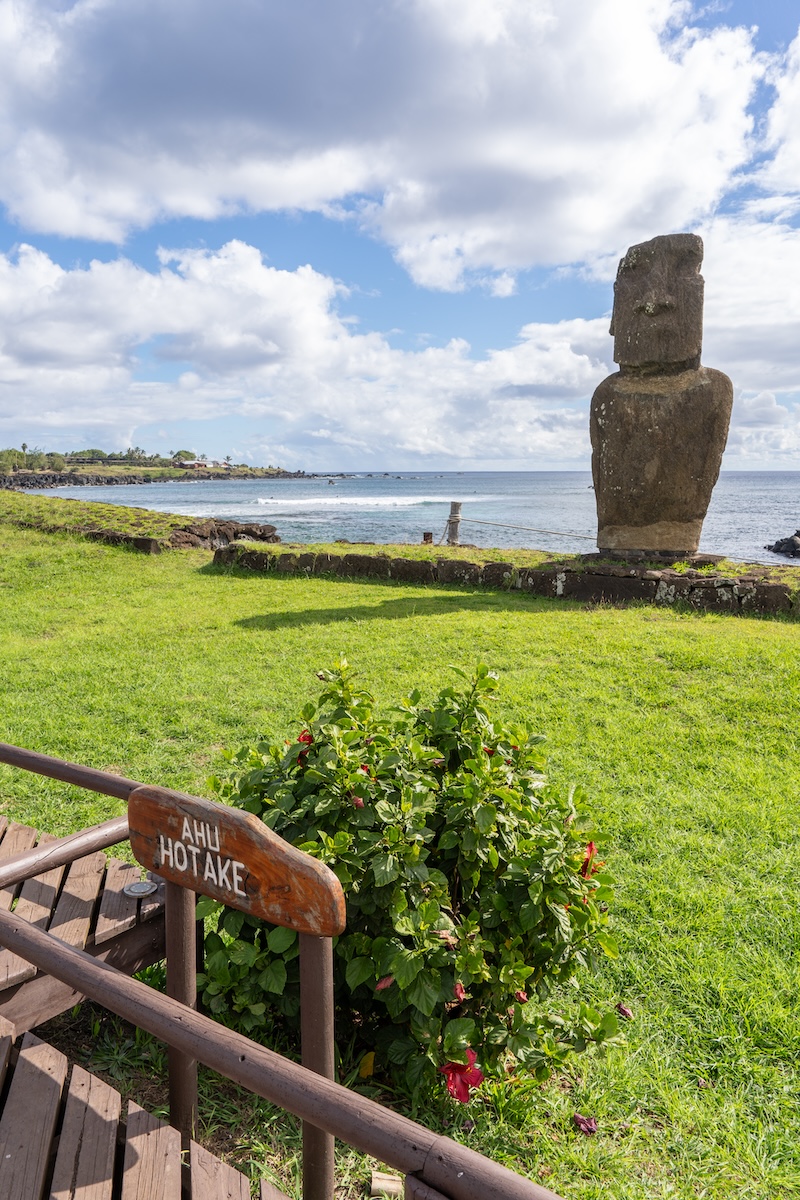

You can find a few more in and around the area just by walking around, like Plaza Hotumatua which is right near the fishing boats.
Tahai at sunset
Tha statues at Tahai are a popular place to go to for sunset as they are in walkable distance from Hanga Roa and right along the coast. There are several lined up that makes for a great shot and one that has eyes and a hat.
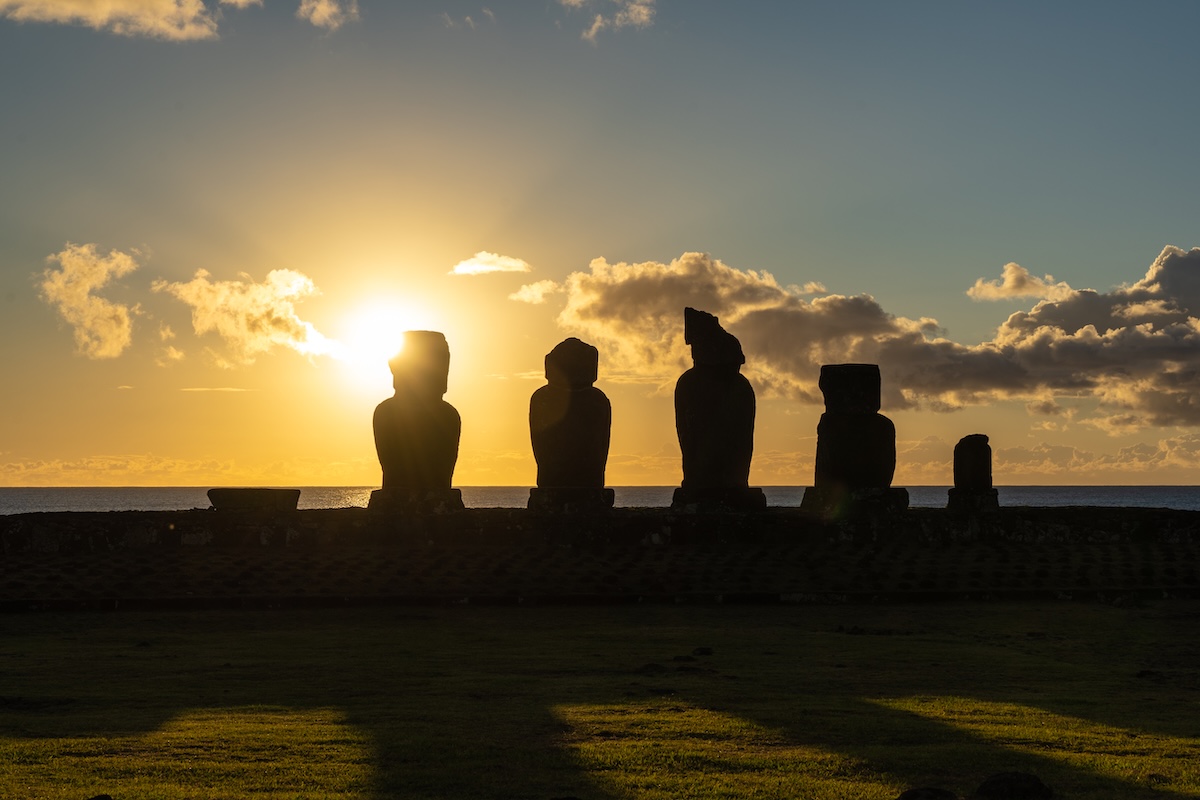
There’s a big grassy area where people sit to watch the sun go down and you might even see some wild horses. I was distracted taking a video and didn’t even realize they were next to me until they quite literally were in my face.
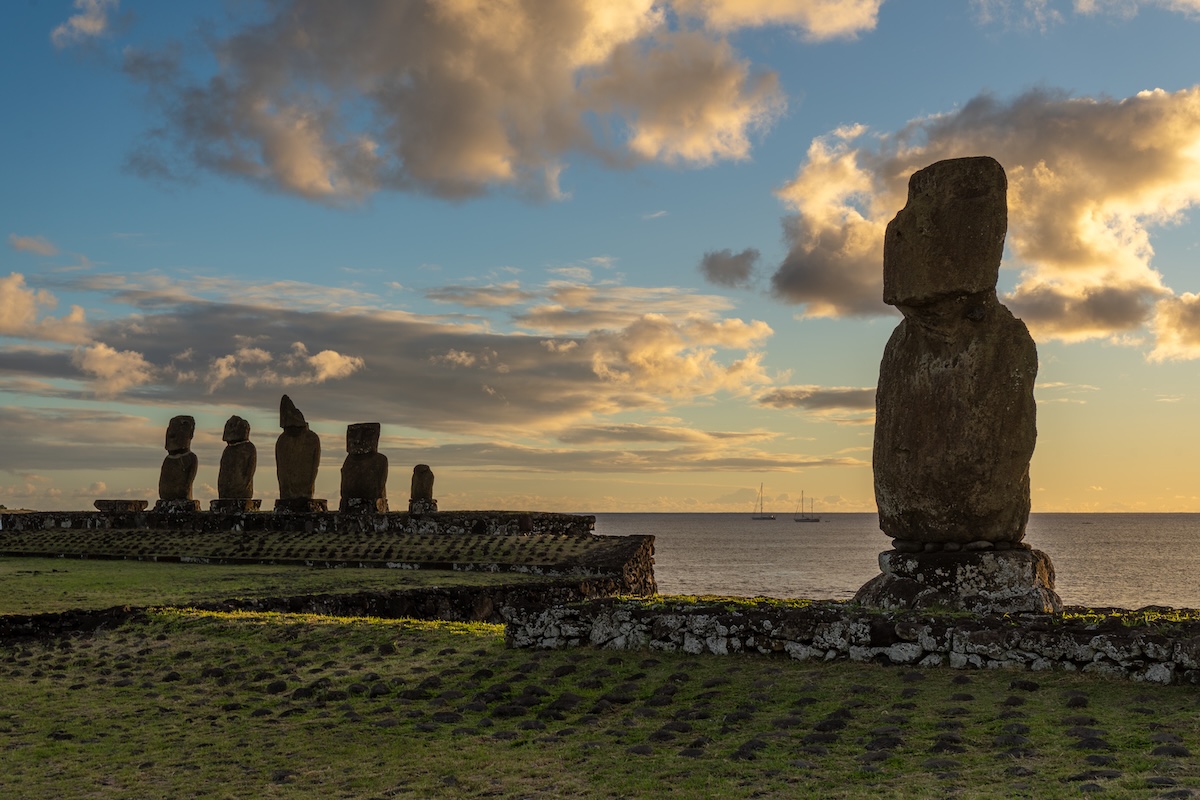
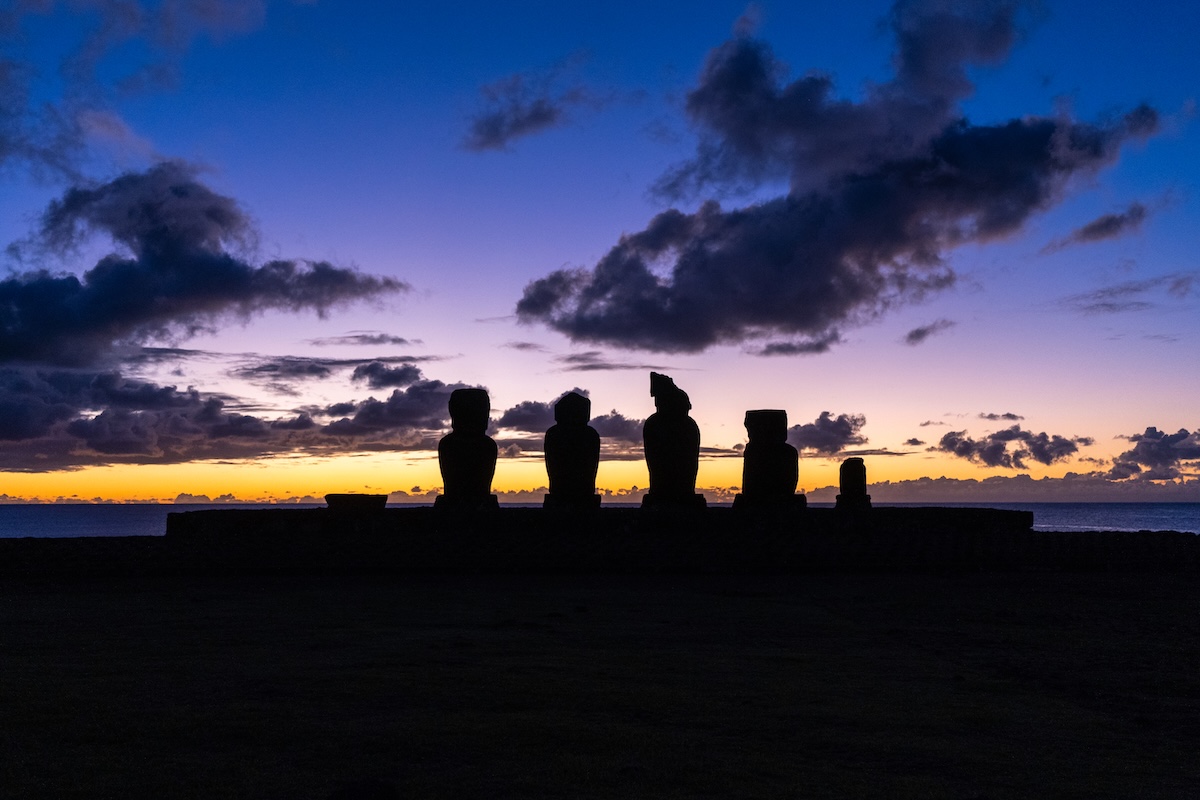
It also rained off and on for some time while I was on the island so I was glad I went the first night even though I was exhausted. It ended up raining at sunset the rest of the time I was there, so definitely take advantage when you can.
Rano Raraku
Rano Raraku is one of the most famous places on the island to visit. It’s a quarry with hundreds of Moai statues scattered about on a hillside. And the hill is actually a volcanic crater.
This is essentially the factory of the Moai statues as almost all of them were created here before being moved to different parts of the island.
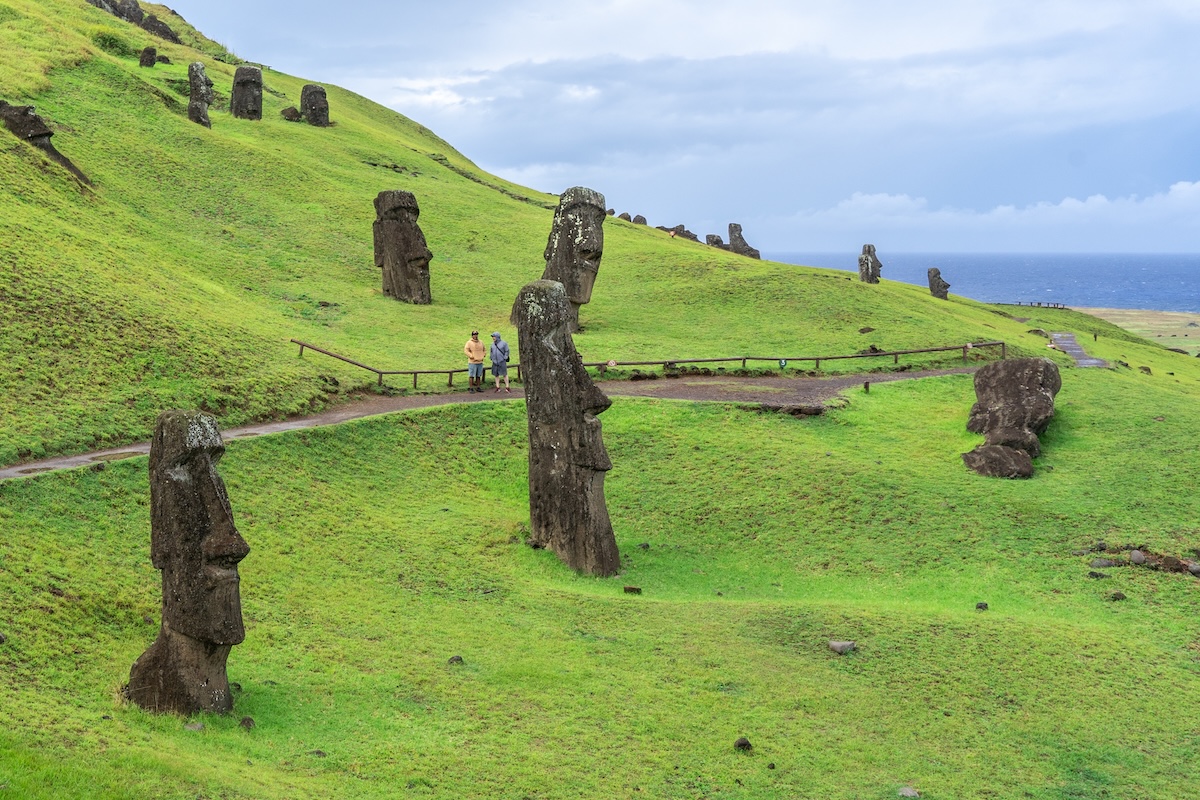
A pathway winds you around the hill and through the Moai, letting you get up close to the statues, many of which are unfinished, tilted or on their side.
You’ll see holes in the rock wall where Moai had been worked on and Te Tokanga, the longest Moai statue ever carved, though it was never finished.
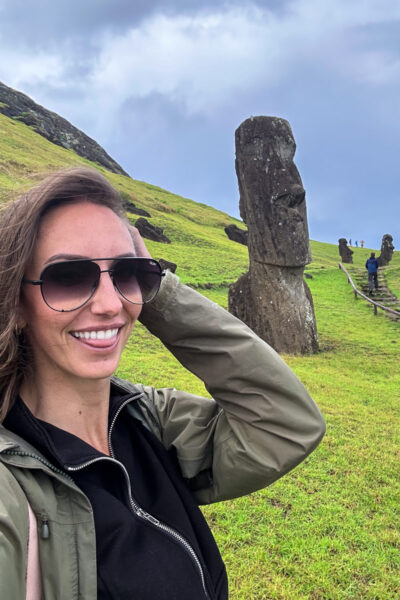
Our tour started out with a pretty rainy morning and when we pulled up to Rano Raraku, it was down pouring. Since I was on a tour, this was my only chance to see this place. We ended up eating at a restaurant at the bottom of the hill to wait out the storm. Luckily, it started to clear just as we got our checks!

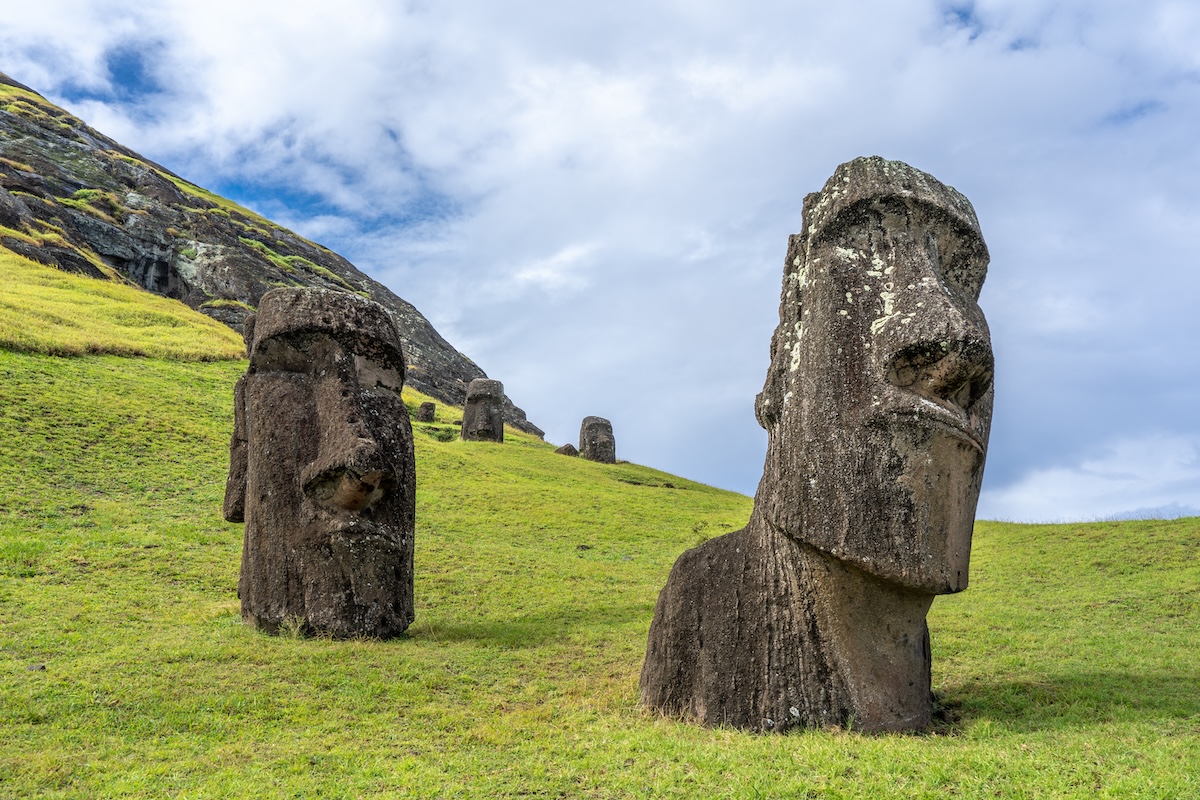
This is one of the places where you will need a guide to enter–you won’t be able to access it on your own. This was my favorite spot to visit so highly recommend getting a guide or tour to make sure you get here.
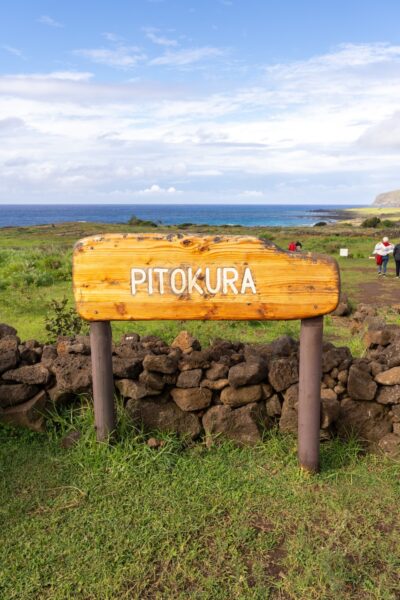
Ahu Te Pito Kura
You’ll also visit several locations that might not be where the statues are but have a cultural significance. There’s a small circular area with round stones in the center. The largest stone is said to have a magnetic energy and increase fertility by touching it.
Ahu Tongariki
Another famous location is Ahu Tongariki, where you’ll find 15 in a line in front of the sea. It’s the longest platform you’ll see. It’s also where you’ll find one of the tallest and heaviest Moai statue to successfully be transported across the island.
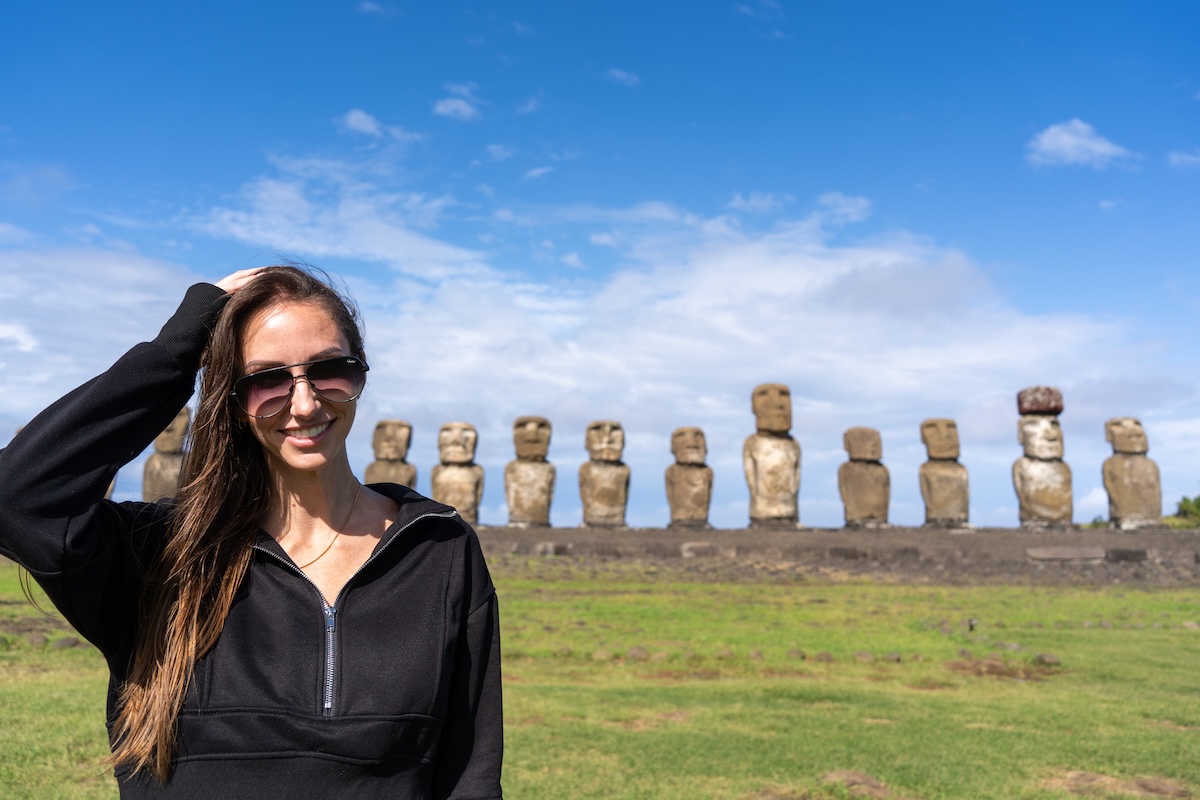
You can actually see the statues from the hillside of Rano Ranaku. So you’ll be visiting them on the same day. This is another location where you are required to enter with a guide.
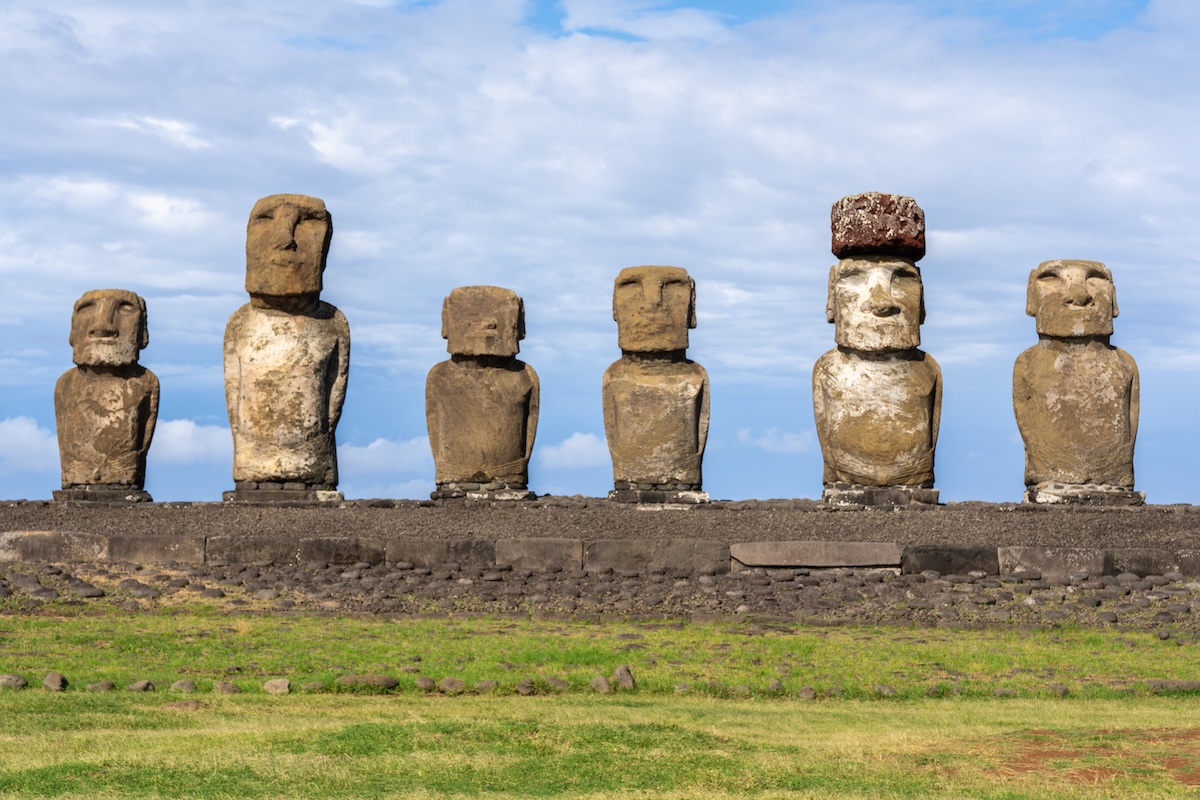
Visit Ahu Tongariki at sunrise
My tour also included a return to Ahu Tongariki the following morning to catch the sunrise. It’s an early start and was completely optional. But it’s always worth waking up early at an iconic spot.
The sun rises behind the statues, so if you have a clear morning, you’ll have an amazing backlit photography moment.
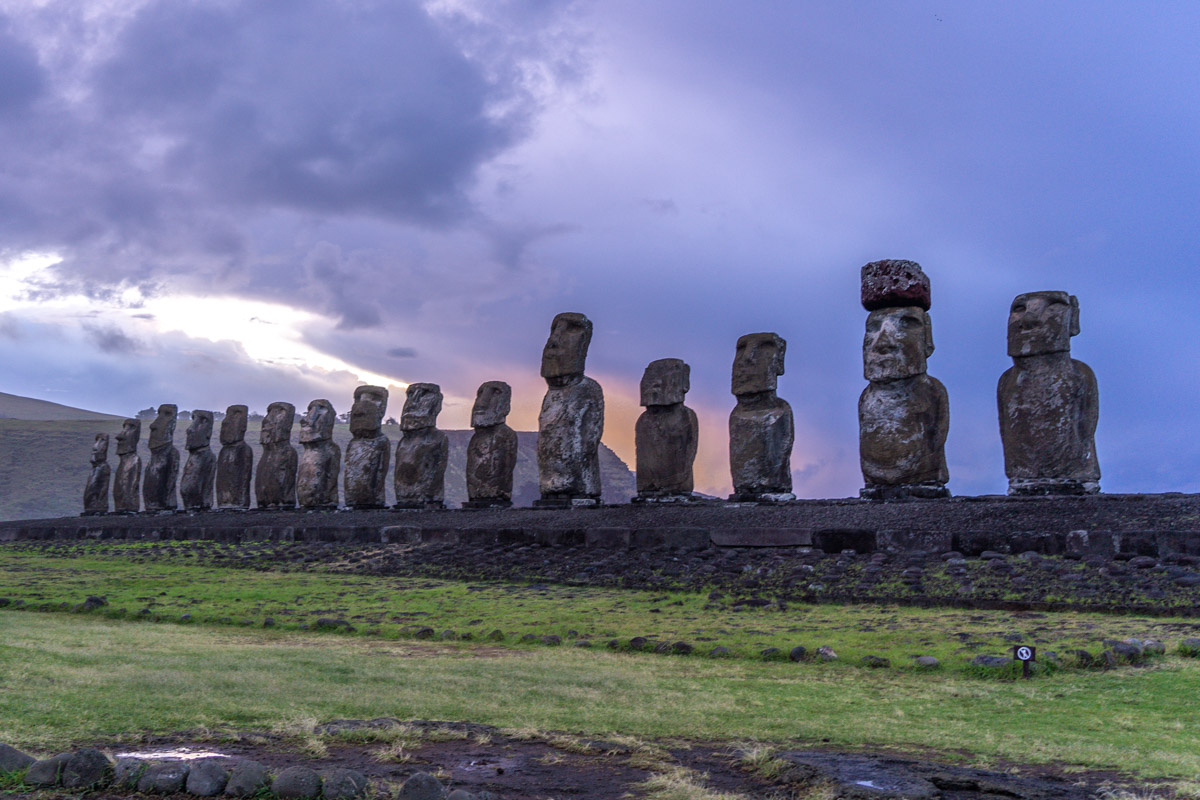
We happened to have a pretty stormy morning, so we never actually saw the sun. But we did get a little cloud dimension in there. I’m just glad it held off raining until after we left because it did start raining again.
Rano Kau + Orongo
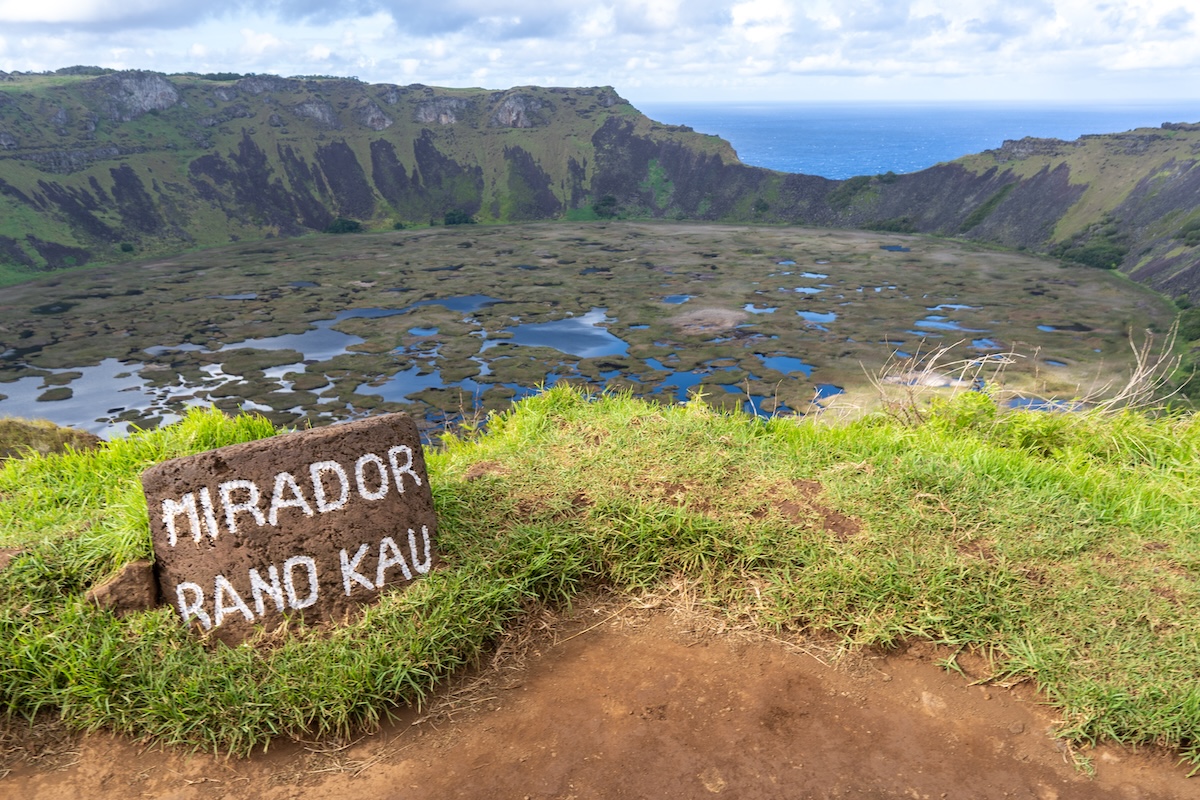
Rano Kau is an extinct volcano located on the southwest tip of the island. There’s a walking path right along the edge. It was very windy for us but it’s a beautiful view.
What’s crazy, is that on one of the edges of the crater is where Orongo, a ceremonial village, is located. The circular stone buildings have quite a view and were only occupied in the days before the Bird Man ceremony. (Where the island’s clans would compete to be in charge of the government.)
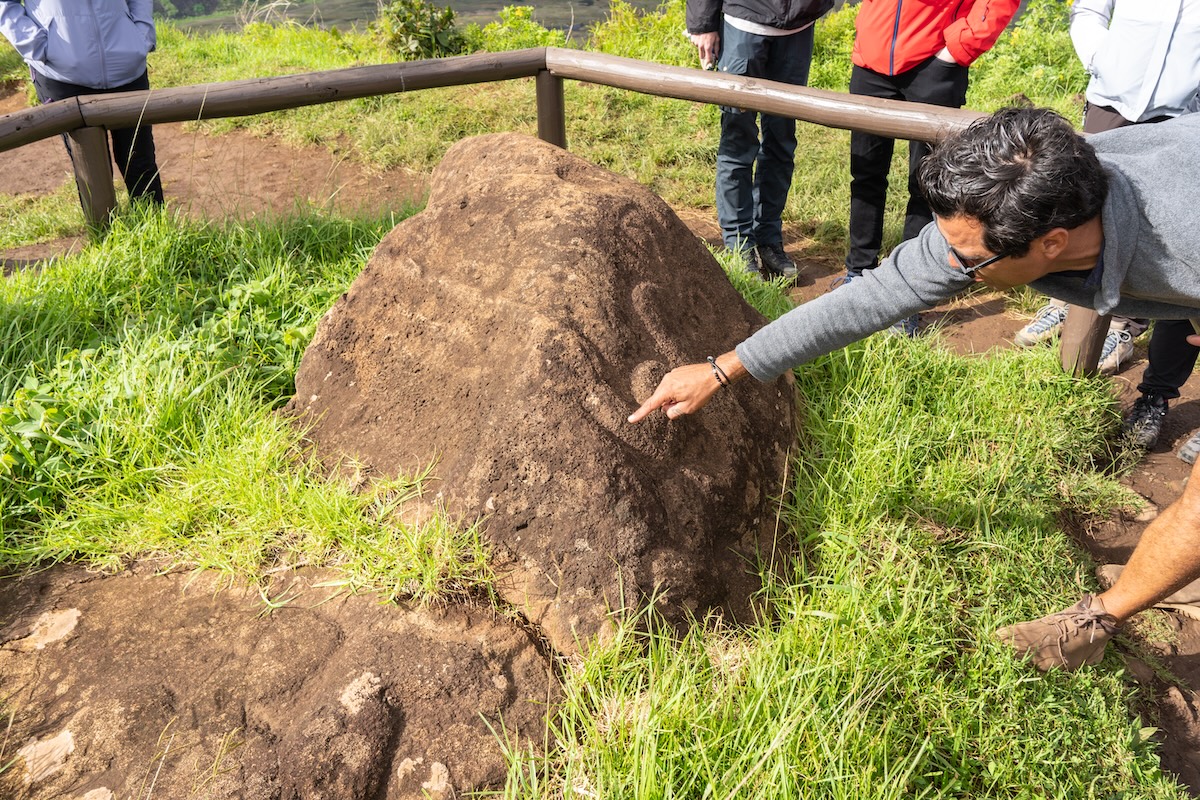

You’re pretty exposed to the elements up here and a group of us found a spot between buildings to protect us from the wind for a bit. But it was pretty cold and windy up here.
Ahu Akivi
When we visited Ahu Akivi, it was raining pretty good, though you can’t tell in my photo. We didn’t stay too long here since we were getting soaked but this is a significant location.
Moai statues face inland and are meant to face the villages, protecting the people. The 7 statues at Ahu Akivi are an exception as they are the only ones that face the ocean.
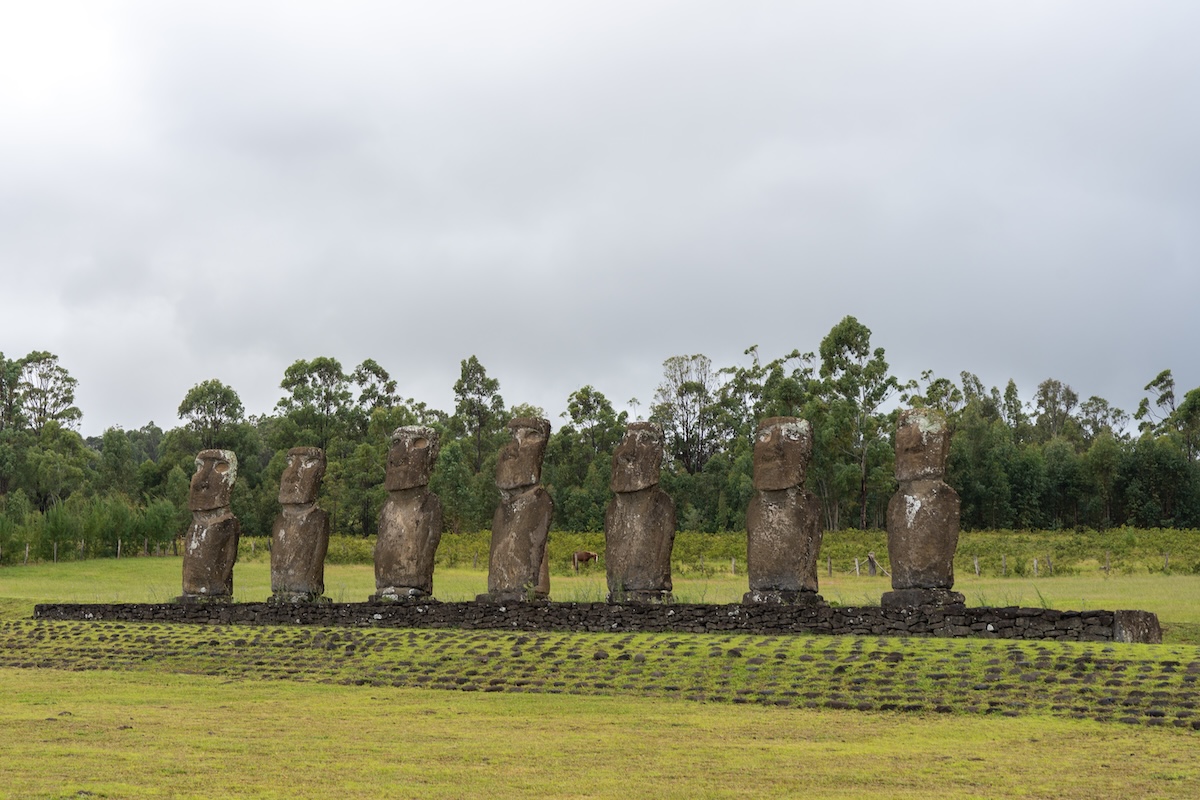
However, our guide told us that there are indications that there was once a village nearby that would have put it between the statues and the ocean. So even though they face the ocean, they also faced the village.
Ana Te Pahu
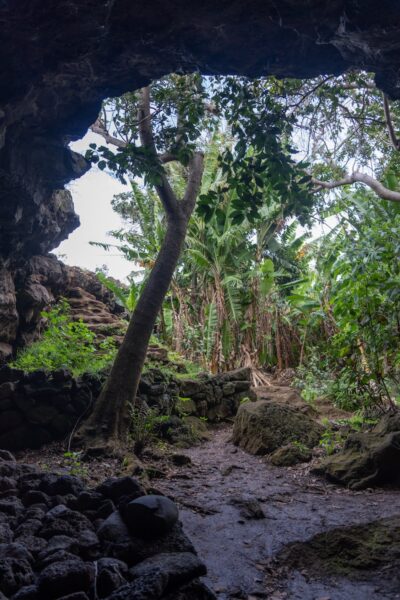
The cavern, Ana Te Pahu, is pretty strange to stumble across. It’s located out in the middle of a field and is a lava channel formed from volcanic eruptions. It looks like a pit in the floor.

You can climb down into it and there are quite a few banana trees growing in the center. Remains indicate that it was used by an ancient civilization and is actually the perfect dwelling. There’s shelter, an opening for sunlight, fruit trees and a pretty large interior of tunnels.
Ahu Nau Nau
Another favorite spot to see is Ahu Nau Nau, 7 statues near the sea. Several of them have the little hats on and the surrounding area is very tropical and scenic.
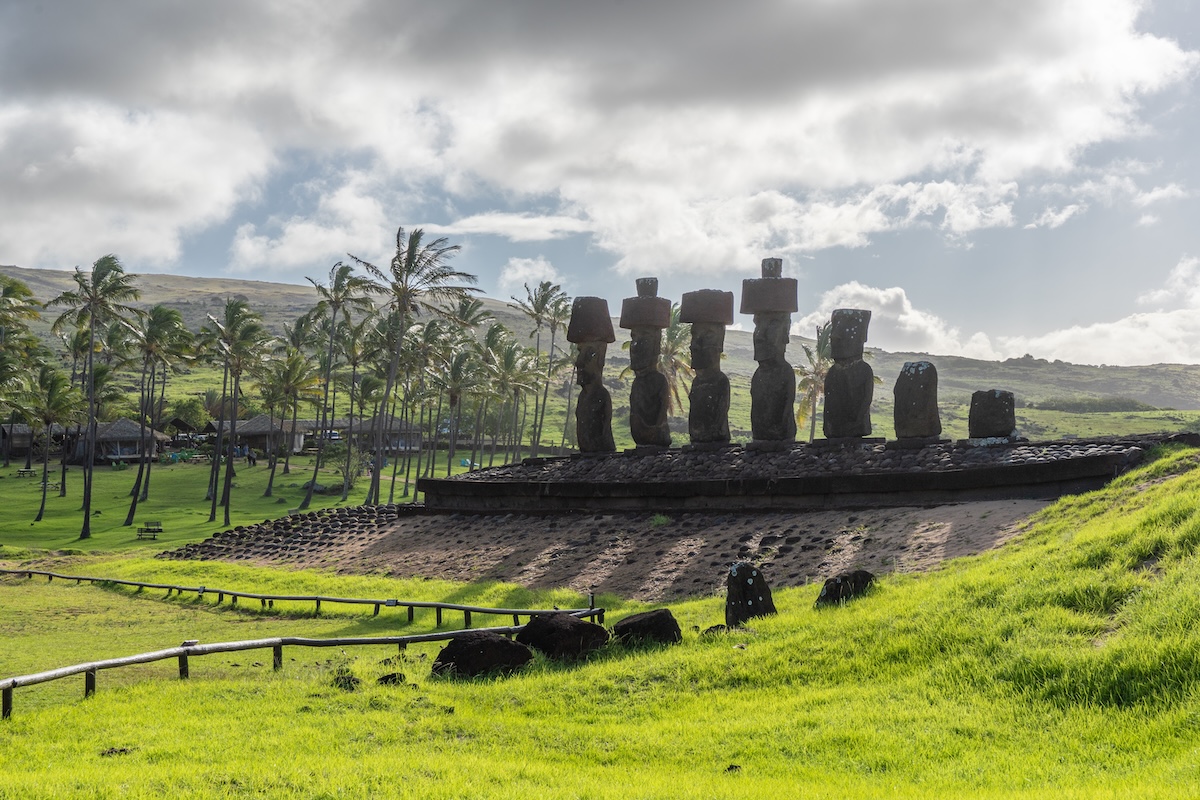
The beach lies just behind them, though you can’s really see it because of the platform. There’s a large, open area to walk around and it’s probably the most tropical looking site because of the surrounding palm trees.
Anakena Beach
Once you visit Ahu Nau Nau, you can head down to Anakena Beach. Though Easter Island is in the South Pacific, it isn’t the most tropical island. The majority of the island has a rocky coast, but there are about 3 main beaches to visit.
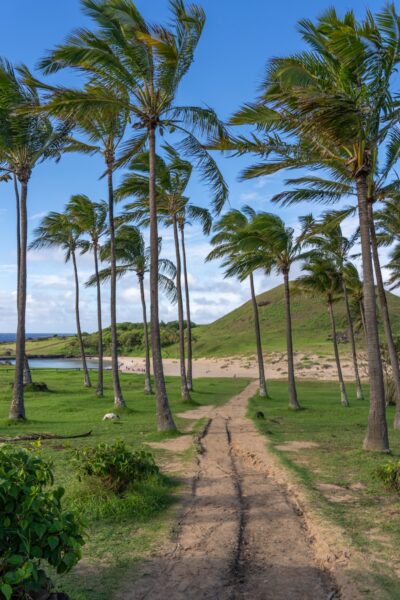
Anakena Beach is the largest and most popular beach to visit. It’s surrounded by palm trees and has a scenic path down to the sand. And of course, has the Moai statues next to it too. There’s also a little beach bar near the entrance where you can have a drink and relax.
Ahu Vinapu
This archeological site is where you can see several knocked down Moai (most statues on the island were knocked down during the clan wars and resurrected later).
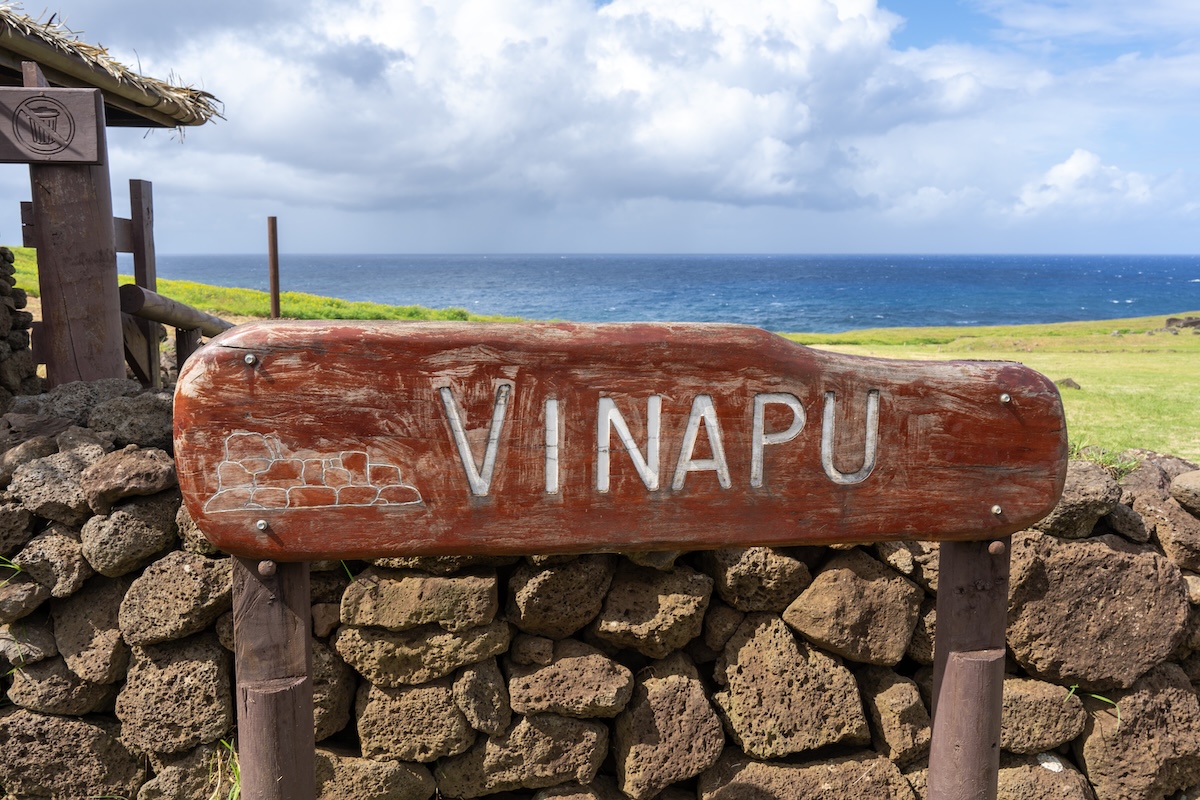

You can also see what looks like an Incan-precision stone wall. A lot of Easter Island’s history is assumed since there isn’t a lot of written evidence but one theory is that the wall was built by an Incan who came from Peru to conquer the islands.
Ahu Akahanga
Ahu Akahanga is an important location on Easter Island as it’s where the tomb of the first king is supposedly located. According to oral traditions, this is where the first king was buried, but no concrete evidence has proven that.
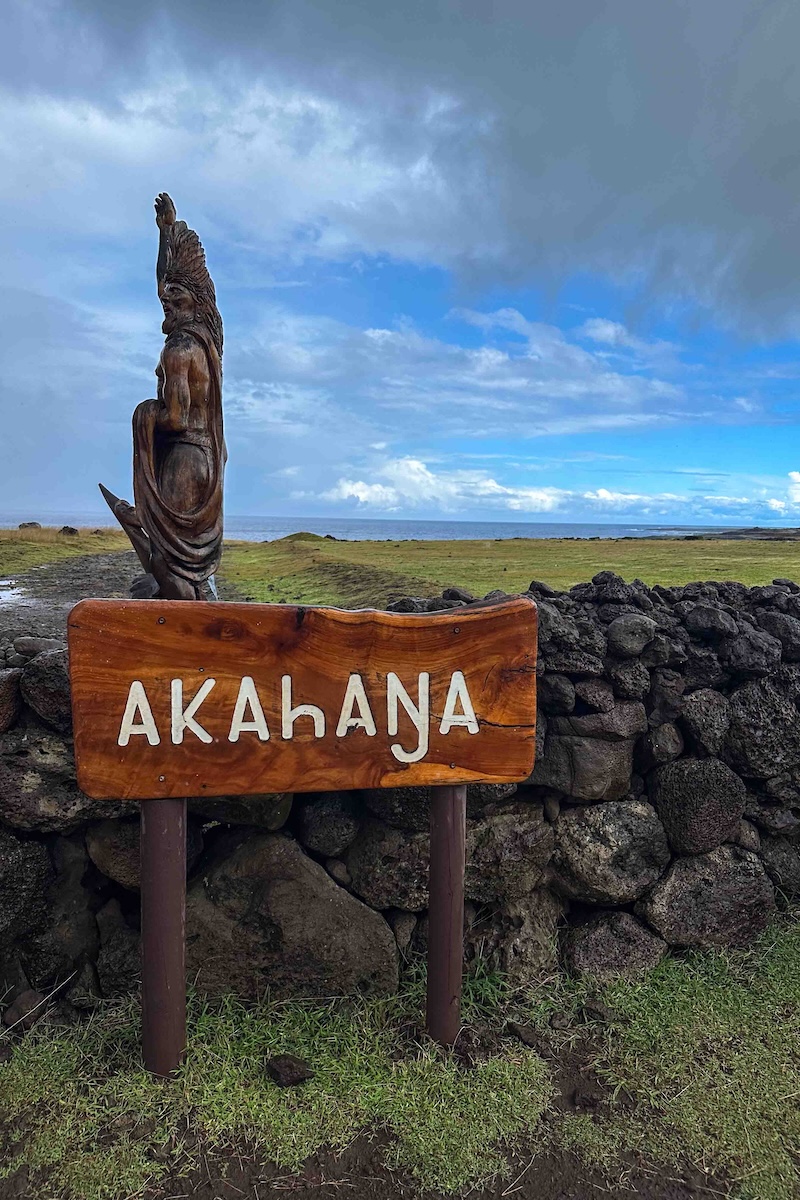
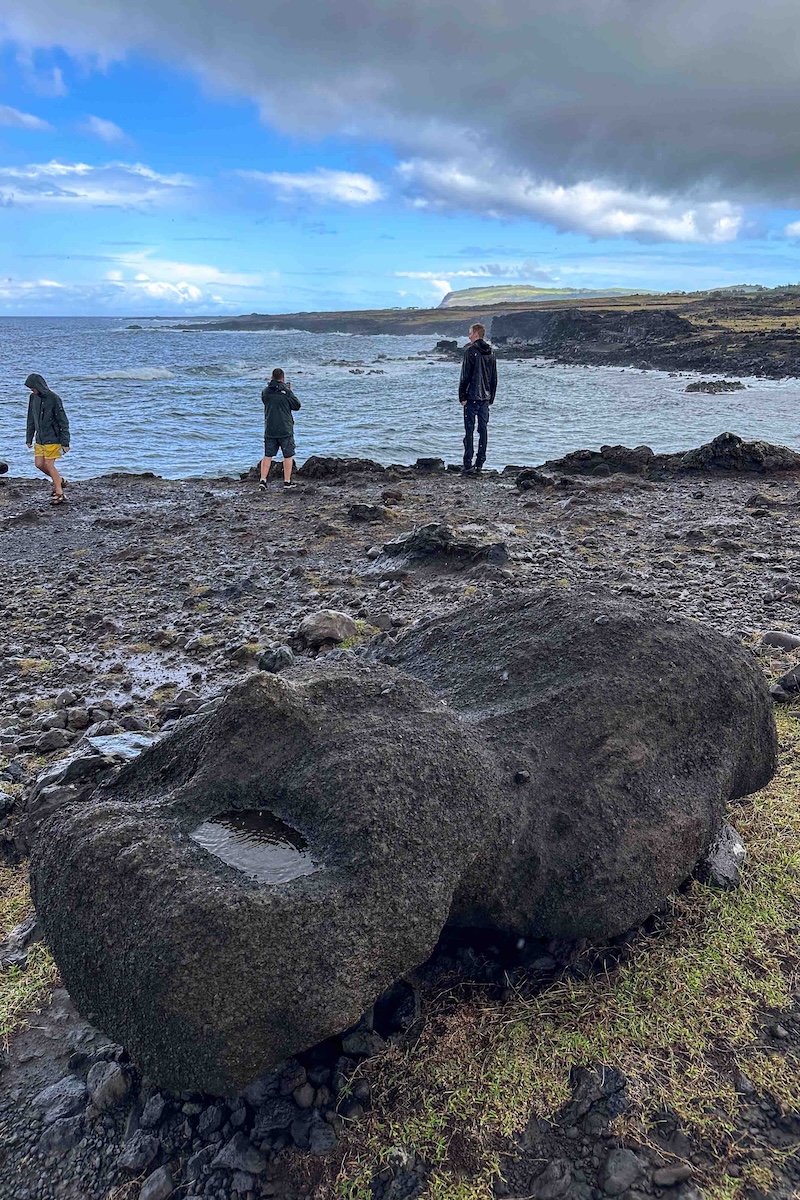
There are caves along the coast and remains of a village. You’ll also see more knocked over Moai. In most places they are face down, but here they were knocked down face down and face up.
Ahu Vaihu
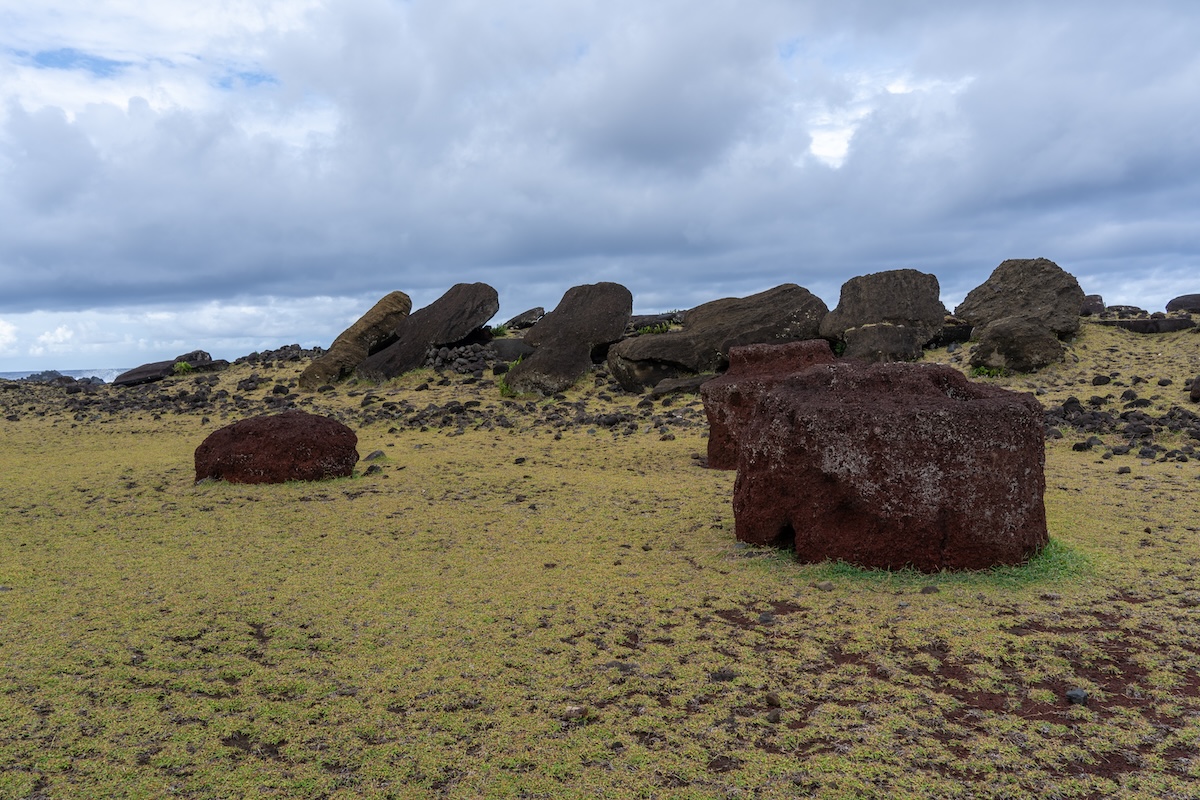
Another place where you can more easily see the destruction of the island from the clan wars is at Ahu Vaihu. It hasn’t been restored and you’ll find many knocked down Moai statues and their hats nearby.
Visiting the National Park
When visiting Rapa Nui National Park, you will need a guide to visit certain areas. You won’t be let in without one. You can visit quite a lot of the statues on the island by yourself but there’s a few things to take note of. You’ll need to rent a car, you won’t have an informative guide giving you the history and you won’t be able to see some of the main places.
To me, it was 100% worth having a guide for the knowledge and being able to see the two most popular spots: Rano Raraku and Ahu Tongariki.
One thing I have to mention is the lack of restroom stops. It was not a consideration on my tour. Our guide and seemingly most people on my tour were very unconcerned about that. They just never had to use the restroom–for like 8 hours!! And for someone who needs to go every couple hours, I was dying.
Yes, this is a pretty remote island and the majority of the places you visit are statues in the middle of nowhere. There are however stone fortress looking restrooms at a lot of the sites BUT they are locked and meant for the ticket workers only (trust me I tried to use several).
How long do you need on Easter Island?
3-4 days is plenty of time to visit Easter Island and see the Moai statues. Hanga Roa is a very small, walkable town and you can explore it pretty thoroughly in a couple days. But the flights in and out will likely determine how much time you spend since there are limited options.
Your exploration of the statues around the island will either be on a guided tour or on your own. If you’re on a tour, you’ll be able to see the main sites once and for a certain amount of time. You won’t be able to go off on your own and at your leisure for a lot of the main places. (Unless you stay longer and do some exploring on your own too.)
I was on a tour and didn’t feel rushed at any of the places. It also included a sunrise stop at Ahu Tongariki which is the famous spot by the sea. So I did get to see that one twice.
Best Time to Visit
The best time to visit the island is from December to February which is summer in the southern hemisphere. You’ll get hotter, sunnier weather on the island. March to May and October to November are also good times to visit as that will be the spring and fall months.
I visited Chile in April and expected weather to still be pretty hot, but I had cool temperatures and quite a bit of rain when I went. It was still a great time to go even though it rained, just cooler than I anticipated.
PIN IT FOR LATER